


Innovation in poultry vaccination: How to improve the health and performance of farm animals?
Poultry vaccination is characterized by continuous innovation that has a positive impact on farm health and performance. How does it do this?

Poultry vaccination is characterized by continuous innovation that has a positive impact on farm health and performance. How does it do this?
The poultry sector: an example of innovation
Global agricultural production has a clear objective to fulfill food demand and contribute to food security. For this reason, the poultry sector has been strengthened in recent years and has optimized various processes to become a world leader.
Currently, the United States is the world’s leading producer of chicken meat with 17% of the market, followed by China and Brazil. Egg production is led by China with 38% of the world market, followed by the United States and India.
The Asian continent has a large human population, which has made it the largest producer of chicken eggs with 64%. It is also noteworthy that the poultry sector has exponentially increased its meat production, from nine million tons in 1961 to 133 million tons in 2020. Currently, chicken meat consumption represents 40% of the global meat market.
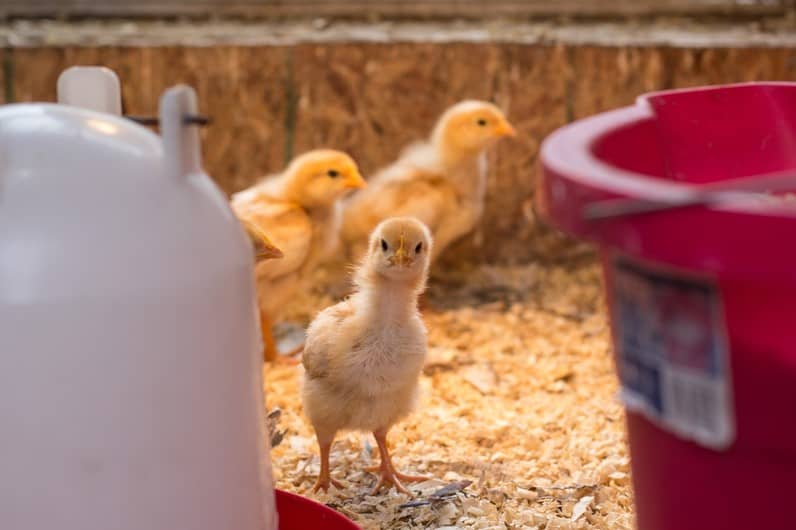
Strategies that have improved poultry farm performance
How has the poultry sector achieved such efficient production? There are several strategies that have played a key role in transforming poultry production worldwide.
- Technology and automation: Efficient poultry production owes much of its improvement to the technologies implemented in various processes. In the last few decades, automation processes have been implemented to speed up and improve the quality of meat and egg products.
- Improved consumption: Chicken meat and eggs are inexpensive foods and make an excellent nutritional contribution to the human diet. As a result, they have become staples on the tables of millions of people around the world.
- Sustainability and animal welfare: The poultry sector has the lowest carbon and water footprint of any livestock system. Poultry production has remarkable feed conversion and unique nutritional efficiency. In addition, the poultry sector has been at the forefront of advances in animal welfare and sustainability.
- Genetic and Nutritional Improvement: World poultry production has implemented high quality genetic selection to obtain lines and strains with the best performance and resistance. These genetic improvements have been complemented by in-depth studies of poultry nutrition to ensure the best production efficiency with welfare and sustainability parameters.
- Vaccine development: The poultry sector has played a key role in the study and development of high-quality vaccination programs. Thanks to innovations in poultry vaccination, infectious diseases have been controlled with satisfactory results.
Which poultry diseases are prevented by vaccination?
A key component of animal health strategies are vaccination programs for poultry. Vaccines consist of attenuated microorganisms or their particles that are designed to activate the immune system and create a memory in the event of an outbreak.
Currently, there is a wide range of infectious diseases affecting poultry, related to the nature of the agents: viruses, bacteria, fungi, parasites. Therefore, for decades we have been working on the innovation of poultry vaccination to achieve better results every time. Some of the most important diseases prevented by vaccination worldwide are.
- Newcastle Disease: It is a disease caused by a paramyxovirus that is very contagious and causes high mortality rates in poultry. Vaccination of poultry against Newcastle Disease is essential to prevent outbreaks in poultry farms.
- Avian Influenza (Bird Flu): A viral disease that in some cases can affect both poultry and humans (zoonosis). Vaccines reduce the spread of the virus among poultry, thereby reducing the risk of transmission to humans.
- Marek’s disease: A viral disease caused by a type 2 herpes virus that primarily affects chicks and causes tumors and neurological disorders.
- Avian cholera: Caused by a bacterium of the genus Pasteurella, which can cause significant morbidity and mortality.
- Avian Infectious Bronchitis (AIB): This is a viral disease caused by a highly contagious coronavirus that affects the respiratory tract of poultry. This virus can reduce egg production and degrade eggshell quality.
- Gumboro disease (infectious bursitis): This is a viral disease caused by a birnavirus that affects the immune system of young poultry, causing damage to the bursa of Fabricius and weakening immunity. Vaccination is essential to prevent the spread of this disease and to protect young poultry.

Innovation in poultry vaccination: What technologies exist?
To control the various infectious diseases that exist in animals, several innovation and development strategies have been implemented in poultry vaccination. Due to the complexity of each pathogen by nature, there are several mechanisms of action of vaccines.
Innovations in poultry vaccination have led to significant improvements in farm performance, as evidenced by reduced morbidity, reduced mortality, increased production rates and improved animal welfare.
- Vector vaccines: These use attenuated or genetically modified viruses that carry a gene from another pathogen to induce the immune response, without the need to use the original microorganism. This has improved the safety and efficacy of vaccines.
- Recombinant vaccines: these use proteins or genes from the pathogen to stimulate the immune response and are specific.
- Subunit vaccines: These use specific fragments, called antigenic subunits, from either viruses or bacteria that are recognized by the immune system. They are very safe and economical to develop.
- DNA/RNA vaccines: Specific fragments of the genetic material (DNA or RNA) of the pathogen can be used to stimulate the immune response in poultry. These vaccines are stable, safe and can be rapidly produced.
- Nanostructures in vaccines: The incorporation of nanostructures into vaccines allows for the controlled release of antigens, improving the efficacy of the immune response and the duration of protection.
Complementary technologies in vaccination: what are they?
In addition to the different mechanisms of action of vaccines, technologies and innovations have been developed to enhance the protective effect of vaccines, either in terms of duration, efficacy, or method of administration. These improvements have contributed significantly to improve on-farm performance. Among these, we can highlight these innovations in poultry vaccination:
- Development of thermostable vaccines: The development of vaccines that are more resistant to temperature changes has been fundamental, especially in areas with logistical difficulties for vaccine storage and transportation. These types of vaccines retain their efficacy even under adverse temperature conditions, facilitating their distribution and use in remote or hard-to-reach areas. This may be common in some poultry production areas.
- Improved adjuvants: Adjuvants are compounds added to poultry vaccines to enhance the immune response. The development of more effective and safer adjuvants has improved vaccine efficacy and reduced potential side effects.
- Inhaled or aerosolized vaccines: Inhalation of vaccines has been shown to be an effective way to stimulate immunity in poultry. This technique can be less stressful for the chicks and facilitates vaccine delivery in large poultry farms.
You can also be interested in: Best Vaccination Practices in poultry: ensuring optimal protection with the most advanced technology
How can aerosol vaccines be administered on the poultry farm?
The development of various poultry vaccination mechanisms and complementary technologies has resulted in better animal health and improved farm performance. In addition, poultry farms are looking to improve their systems by incorporating automated equipment and efficient vaccination technologies.
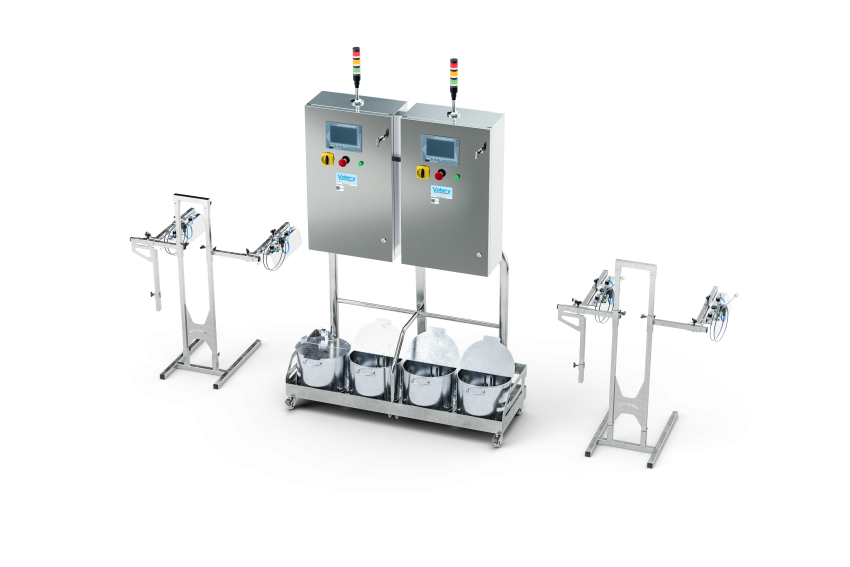
For this reason, Valery Technologies, a division of Giordano Poultry Plast, has designed the Pneu – Cabin Spray/Gel Manual Dual Evo, which operates manually and with a pneumatic mechanism. This equipment is ideal for small and medium hatcheries that want to optimize the health and immunity of their poultry.
In addition, Valery Technologies has developed the E – Concept Spray Gel Cabin. This innovative equipment in poultry vaccination is fully electric and has an autonomous transport system, which makes it highly adaptable to any medium-sized production facility.

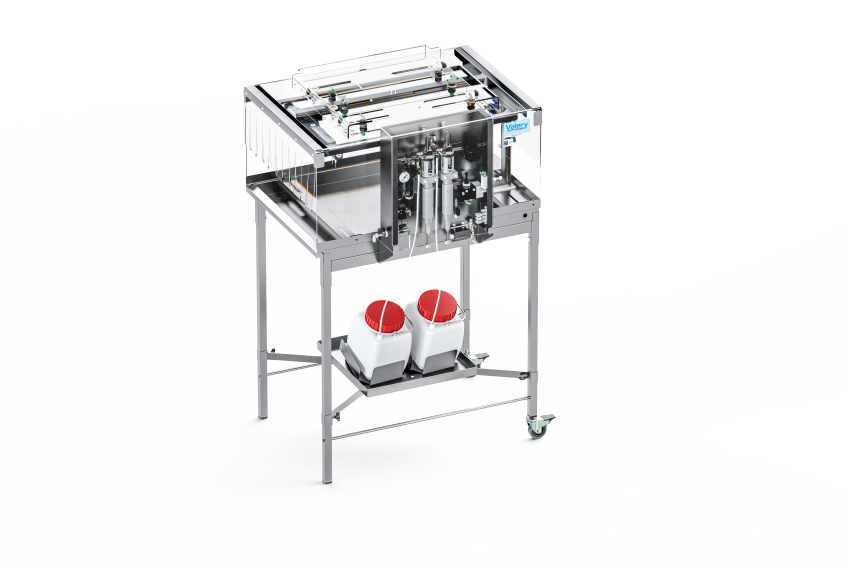
Another innovation developed by Valery Technologies in the field of poultry vaccination is the E-Trolley sprayer wagon. This vaccination equipment has a 50- or 120-liter version, ideal for small and medium production. It is an easy-to-use equipment, with a fully electric and adjustable system to inoculate vaccines at the level of all the cages. Thanks to its structure, the Valery Technologies E-Trolley can vaccinate six lines of cages per side simultaneously.
This innovative poultry vaccination equipment from Valery Technologies is characterized by its versatility and ease of use, as well as its strength due to its stainless-steel construction and modern design. In this way, the performance of the farm can be increased through the vaccination of poultry, especially those administered by aerosolization.
Conclusions
The poultry sector is a world reference in the agricultural industry thanks to its good practices, implemented technologies and innovations. Among the many strategies that have been implemented in poultry farming, improvements in poultry vaccination stand out, which has improved farm performance.
Vaccination of poultry can control and significantly reduce the impact of a wide range of viral, bacterial, and parasitic infectious diseases. To this end, different mechanisms of action of vaccines have been developed to ensure their efficacy and optimal immunity.
There are also complementary technologies to improve poultry vaccination, where the development of aerosols for vaccine delivery stands out. Therefore, Valery Technologies has developed a range of products that significantly improve the vaccination process in poultry plants or farms.


CATEGORIES
- Antibiotics
- Antioxidants
- Aquaculture
- Deodorizer
- Digestives
- Dissemination
- Enzymes
- Events
- Farm management
- Farm management
- Fats
- Feeding
- Flavorings
- Immunostimulants
- Microbiocide
- Mycotoxins
- Nutritionals
- Pathology
- Pharmacology
- Poultry Farming
- Preservatives
- Pronutrients
- Ruminants
- Swine
- Technology
It may interest you
Viral respiratory diseases in poultry farming: How to prevent them with vaccination systems
Reduction of gases in pig farms: the role of natural additives in emission mitigation
Poultry Nutrition: the role of feed supply systems and their impact on sustainable production
Enterococcus cecorum: A Growing Challenge in Broiler Production

Biosecurity in egg handling: What recommendations to consider?

Leave a Reply
You must be logged in to post a comment.