


Reduction of gases in pig farms: the role of natural additives in emission mitigation
The accumulation of harmful gases in pig farms is a recurring issue that affects animal welfare and the environment. Ventilation systems have become a fundamental tool to minimize gas concentration...

The accumulation of harmful gases in pig farms is a recurring issue that affects animal welfare and the environment. Ventilation systems have become a fundamental tool to minimize gas concentration inside facilities; however, this approach does not address the generation of these compounds at their source. Among the most concerning gases, ammonia (NH3) and nitrous oxide (N2O) are notable for their harmful effects on both animal and human health, as well as for their environmental impact.
Origin and issues of gaseous emissions in pig production
Ammonia is a byproduct of nitrogen metabolism in pigs, mainly generated by the microbial decomposition of urea in excreta. When accumulated in high concentrations, this gas can damage the respiratory epithelium of animals, compromising their health and productivity. On the other hand, nitrous oxide, a greenhouse gas with a global warming potential 300 times higher than carbon dioxide (CO2), is formed in manure management systems and significantly contributes to climate change and ozone layer depletion.
Environmentally, ammonia emissions contribute to acidification and eutrophication of soils and water bodies, causing ecological imbalances. Although forced ventilation helps evacuate these gases from farm buildings, their release into the atmosphere remains a major issue.
Nutritional strategies to reduce gaseous emissions
In the search for complementary solutions to ventilation systems, the inclusion of natural additives in pig diets has proven to be an effective strategy for reducing gas generation at its source. These additives, derived from plant extracts, minerals, and prebiotic compounds, act on digestive physiology and intestinal microbiota, improving nitrogen utilization efficiency and reducing its excretion.
The mechanisms of action of these additives include:
- Modulation of intestinal microbiota: They promote the balance of beneficial microbial populations, reducing undesirable protein fermentation and the generation of volatile nitrogenous compounds.
- Improved nutrient absorption: They optimize the digestibility of proteins and amino acids, decreasing the amount of unused nitrogen eliminated in excreta.
- Ammonia adsorption and neutralization: Some additives contain compounds capable of binding ammonia in the digestive tract, preventing its release into the environment.
- Reduction of excreta pH: A more acidic environment in the excreta limits the activity of ureolytic bacteria, responsible for the conversion of urea into ammonia.
Application of natural additives in sustainable production systems
The implementation of natural additives in pig diets not only contributes to mitigating gaseous emissions but also improves animal welfare and production efficiency. Recent studies have shown that the use of specific additives can reduce ammonia concentration by up to 85%, representing a significant advancement in the sustainability of the sector.
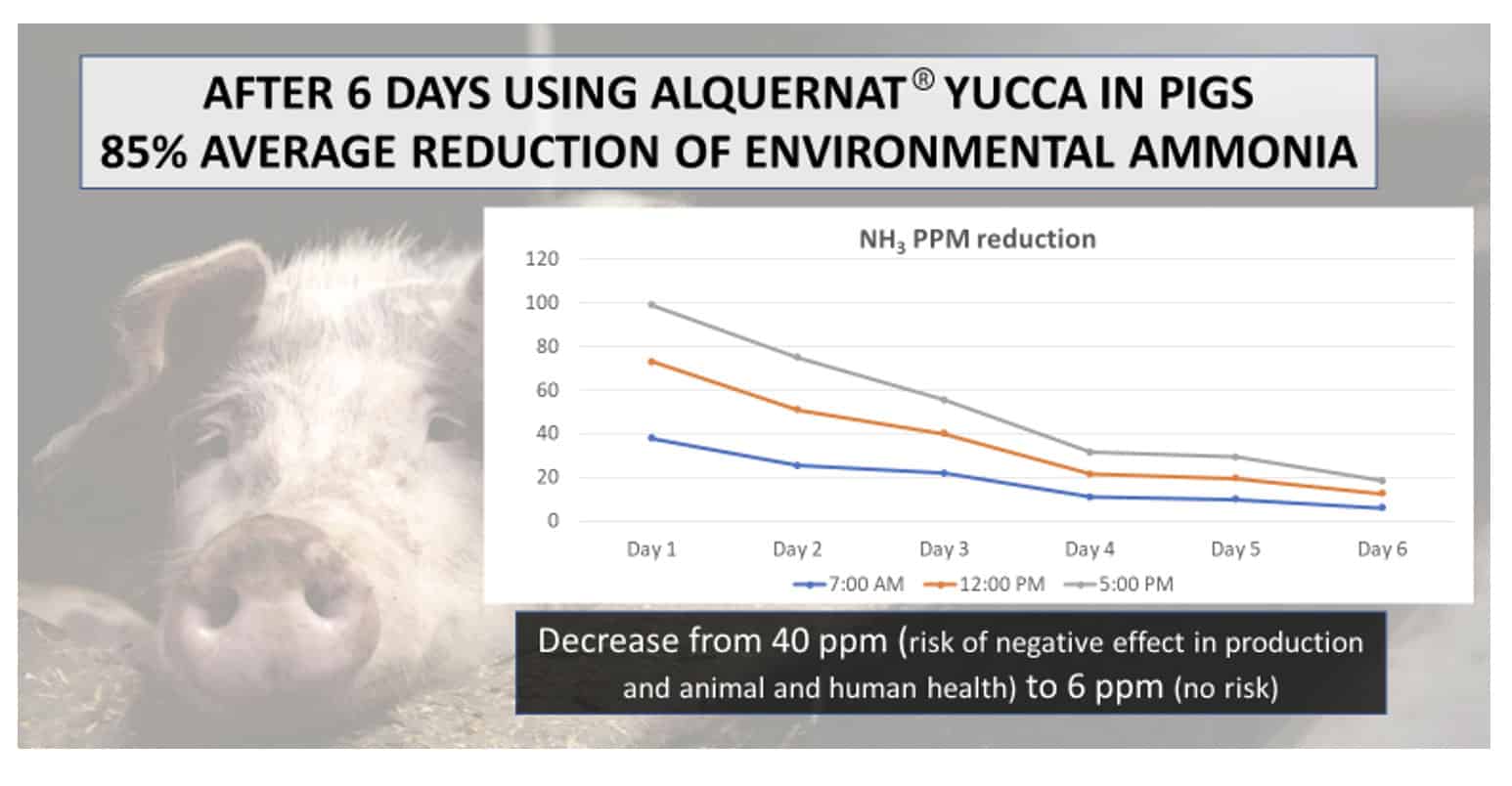
Amid increasingly strict environmental regulations and a growing demand for more responsible animal production, producers must adopt strategies to reduce the environmental footprint of their farms. The combination of efficient ventilation systems with the use of natural additives in pig diets represents a comprehensive and effective solution to minimize the environmental impact of pig production.
Conclusion
Controlling gaseous emissions in pig farms cannot rely solely on mechanical ventilation. The inclusion of nutritional strategies based on natural additives is a key tool for reducing gas generation at its source, improving production efficiency, and decreasing the environmental impact of livestock activities. Research and the development of innovative solutions will continue to play a fundamental role in the transition toward more sustainable and competitive pig production.


CATEGORIES
- Antibiotics
- Antioxidants
- Aquaculture
- Deodorizer
- Digestives
- Dissemination
- Enzymes
- Events
- Farm management
- Farm management
- Fats
- Feeding
- Flavorings
- Immunostimulants
- Microbiocide
- Mycotoxins
- Nutritionals
- Pathology
- Pharmacology
- Poultry Farming
- Preservatives
- Pronutrients
- Ruminants
- Swine
- Technology
It may interest you
Viral respiratory diseases in poultry farming: How to prevent them with vaccination systems
Poultry Nutrition: the role of feed supply systems and their impact on sustainable production
Enterococcus cecorum: A Growing Challenge in Broiler Production
Biosecurity in egg handling: What recommendations to consider?
Cochlosoma in turkeys


Leave a Reply
You must be logged in to post a comment.