


Intestinal optimizer pronutrients as an alternative to coccidiostats
Coccidiosis is a parasitic disease that affects poultry industry, especially broiler chickens. It is caused by protozoa of the genus Eimeria, which multiply in the intestinal and caecal mucosa of birds...

Coccidiosis is a parasitic disease that affects poultry industry, especially broiler chickens. It is caused by protozoa of the genus Eimeria, which multiply in the intestinal and caecal mucosa of birds. The disease can cause, among other problems, diarrhoea, weight loss and worsening of the feed conversion rate, as well as anemia and high mortality.
Birds become infested by ingesting sporulated oocysts of Eimeria present in soil, litter, water, or transmitted by vectors such as Alphitobius. The sporulated oocysts release sporozoites in the intestine, which invade the intestinal cells, causing damage as they continue to multiply and go through the different phases of their initial asexual cycle.
Impact of coccidiosis in the poultry industry
Coccidiosis is one of the most important diseases affecting the poultry industry worldwide. This disease causes economic losses of billions of dollars every year. The losses are due to reduced meat production, increased mortality and extra costs associated with treating the disease.
There are several measures that can be adopted to prevent coccidiosis in broilers, including:
- Management: Proper management of birds, such as regular cleaning and disinfection of the farms, can help reduce the risk of coccidiosis.
- Vaccination: There are vaccines available for coccidiosis, which can be an effective tool to prevent the disease. However, the effectiveness is not homogeneous, and the effectiveness depends on the coccidia strains that affect the farm in every single production cycle.
- Coccidiostats: These are substances that are added to feed to prevent coccidiosis, and there are two types, chemicals and ionophores, which despite being used for decades, their effectiveness is declining due to the resistance they generate, in addition to many prohibitions about its use.
Disadvantages of chemical and ionophore coccidiostats
Chemical and ionophore coccidiostats are the most used type of anticoccidial programs nowadays. However, its use entails several disadvantages:
- Resistance to coccidiostats:
Continued use of coccidiostats can lead to the development of resistances. This means that coccidia become less sensitive to coccidiostats, which reduces their effectiveness and may require the use of more expensive products or those with greater side effects. Coccidiostat resistance is a growing problem in the poultry industry, and it is estimated that it already affects more than 50% of poultry farms in the world.
- Impact on the intestinal microbiota:
Ionophores, mainly, can alter the intestinal microbiota of birds. This can have a negative impact on intestinal well-being, digestion, and nutrient absorption. Furthermore, alteration of the intestinal microbiota can increase the susceptibility of the chicken to other diseases, due to the impact that the microbiota exerts at other organic levels.
- Residues in meat and eggs:
Chemical and ionophore coccidiostats can leave residues in poultry meat and eggs. This can be a problem for consumers, who require chemical-free poultry products, and for global legislation, which is strict in this regard.
- Toxicity:
Many of these compounds generate toxicity, as is the case of nicarbazin, which in the case of laying hens alters the recycling of porphyrins, and manifests itself with the production of white eggs.
Alternatives to chemical and ionophore coccidiostats
Different alternatives to chemical and ionophore coccidiostats have been developed over recent years for the prevention of coccidiosis. Among these alternatives are the intestinal optimizer pronutrients, developed and patented by Biovet SA.
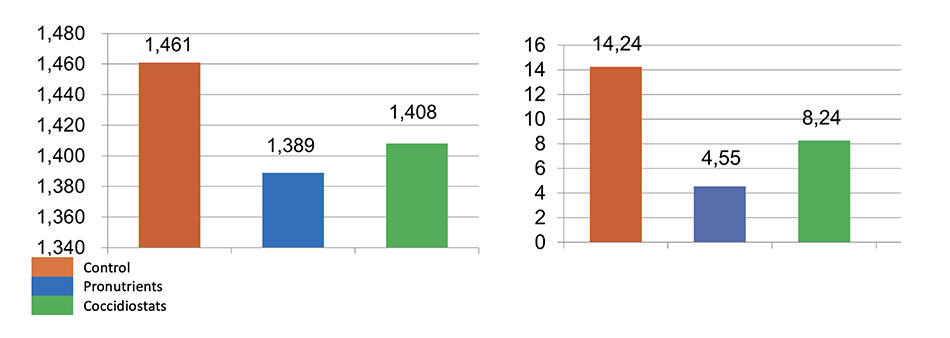
These are natural molecules that stimulate the development of immunity against coccidiosis, promoting the activation of local immunity at the intestinal level, key in the response of the broilers to eliminate coccidia. They stimulate the expression of interleukins that are key in the activation of the Th1 immune response, essential in the elimination of intracellular parasites such as coccidia. In this way, the mucosa maintains its nutritional and defensive functions in optimal conditions, and allows the feed conversion rate and mortality percentage to be improved in regions where the prevalence of coccidiosis is high. This has been reflected in several experimental and commercial trials, such as the following one, carried out in the Meghna delta.
Conclusion
Coccidiosis is a high-impact disease that affects the poultry industry worldwide. Chemical and ionophore coccidiostats are part of most of the anticoccidial programs, even nowadays, in different countries, but their effectiveness has been limited by several factors, being the most important ones, the resistance generated by the different species of Eimeria against to these substances, the legal limitations on their use, or toxicity problems, among others. Innovative tools, such as those based on intestinal optimizer pronutrients, have proven to be an effective tool, improving the effect of other anticoccidial programs, including those based on coccidiostats. These natural molecules stimulate the local immunity of the intestine, so that the digestive tract can prevent a coccidia infestation, without generating resistances, leaving residues, nor creating toxicity, and improving productive parameters and reducing mortality.


CATEGORIES
- Antibiotics
- Antioxidants
- Aquaculture
- Deodorizer
- Digestives
- Dissemination
- Enzymes
- Events
- Farm management
- Farm management
- Fats
- Feeding
- Flavorings
- Immunostimulants
- Microbiocide
- Mycotoxins
- Nutritionals
- Pathology
- Pharmacology
- Poultry Farming
- Preservatives
- Pronutrients
- Ruminants
- Swine
- Technology
It may interest you
Viral respiratory diseases in poultry farming: How to prevent them with vaccination systems
Reduction of gases in pig farms: the role of natural additives in emission mitigation
Poultry Nutrition: the role of feed supply systems and their impact on sustainable production
Enterococcus cecorum: A Growing Challenge in Broiler Production

Biosecurity in egg handling: What recommendations to consider?


Leave a Reply
You must be logged in to post a comment.