


The importance of water in poultry production: how to achieve an efficient supply system?
Water is a vital element for poultry farms, therefore an efficient supply system for the birds must be in place.
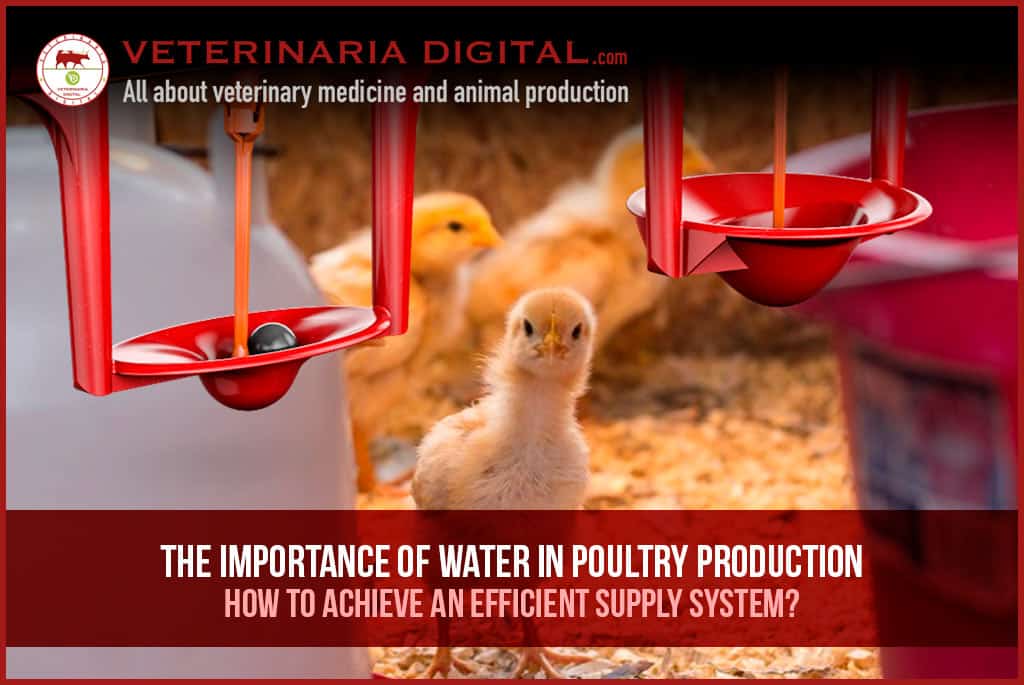
Water is a vital element for poultry farms, therefore an efficient supply system for the birds must be in place. How can this be achieved in poultry farming?
The growth of the human population and the demand for food in recent decades have made the production of meat and eggs indispensable for millions of people.
Agricultural systems aim to produce high quality protein and food for people while ensuring affordability and minimal environmental impact.
To achieve this, poultry farms have set goals such as reducing costs associated with water systems, improving feed conversion, reducing water footprints, and ensuring animal welfare.
Importance of water for animal health
Water is an essential component of animal life due to its role as a universal solvent in physiological processes. Body water is found at the intracellular, extracellular, and free compartment levels, ensuring biochemical and cellular processes.
The organs of the bird’s body require optimal levels of water to conduct physiological processes such as cardiovascular, respiratory, digestive, nervous, and other functions. Water mobilizes molecules that can function as nutrients or metabolic waste.
One of the key roles of water in poultry production is thermoregulation. Birds are physiologically deficient in heat elimination, so they counteract excess heat by breathing. In the process, they lose a significant amount of body water, which must be replenished.
For this reason, it is essential to ensure permanent and safe access to drinking water suitable for human consumption in poultry farming. This will ensure the proper functioning of organic systems and production factors.
Water supply for birds: Key to sustainability and animal welfare
Water is a valuable resource for humanity and must be managed sustainably and responsibly in animal production systems. In recent years, water supply systems have been optimized to be more efficient and reduce water demand.
Currently, poultry farming has been found to have the smallest water footprint compared to other animal production systems. As a result, poultry farms that implement efficient water supply systems are characterized by environmental sustainability.
Climate change has made water access and supply more challenging in some regions. For this reason, it is essential for farms to implement efficient equipment and systems for supplying water to the birds.
In addition, there are animal welfare principles that need to be constantly considered in poultry farming. One of these focuses on the five animal freedoms, which must ensure that birds.
- Do not suffer from thirst or hunger
- Exempt from disease and injury
- Allowed to express their behavior
- Safe from fear or distress
- Free from physical or thermal discomfort
It is therefore essential that poultry facilities have efficient systems for the supply of clean and continuous water. This ensures bird welfare, prevents thirst, and improves animal production indices by ensuring efficient feed consumption.
Factors affecting water supply in poultry production
The water consumption of birds on the farm is determined by several factors. These elements of the water supply system must be considered to ensure welfare, sustainability, and productive efficiency.
Water consumption on the poultry farm can be influenced by factors related to the installation and management of the water system, such as
- Temperature of the water supplied
- Mineral content of the water
- Type of drinkers installed
- Type of feed supplied (percentage of protein, minerals, carbohydrates)
- Humidity in the poultry house
- Ambient temperature
In addition, there are factors related to the birds that affect the amount of water they consume during the production cycle, such as
- Type of production (layers or broilers)
- Genetics
- Gender
- Stage of production (age of birds)
- Population density in the house
These factors must be considered in the poultry farm to implement or correct water supply systems. It has been shown that a deficit in the water consumed by the birds can affect the quality of meat and the quality and production of eggs in laying hens.
You also can be interested in: Optimization and welfare on the poultry farm: the essential plastic equipment
Types of water supply systems on poultry farms
Water supply on the poultry farm must be provided by a system that is appropriate to the context of the area, the type of birds on the farm and the production conditions.
An excellent option is plastic water supply equipment for poultry farms. These devices are characterized by high durability, resistance, hygiene, adaptability, and sustainability in production.
Giordano Global is a widely recognized Italian company for its plastic watering equipment for poultry farms. Giordano Global drinkers are designed for laying hens, broilers, ducks, turkeys, or chicks.
In addition, equipment such as Super Drop Drinking, Drinker-T-Line or Mini Jumbo feature innovative designs, innovative technology, and optimal mechanisms to ensure water supply to the birds without waste or contamination.
In poultry farming, nipple drinkers are widely recognized for their ergonomic and straightforward design that reduces water wastage.
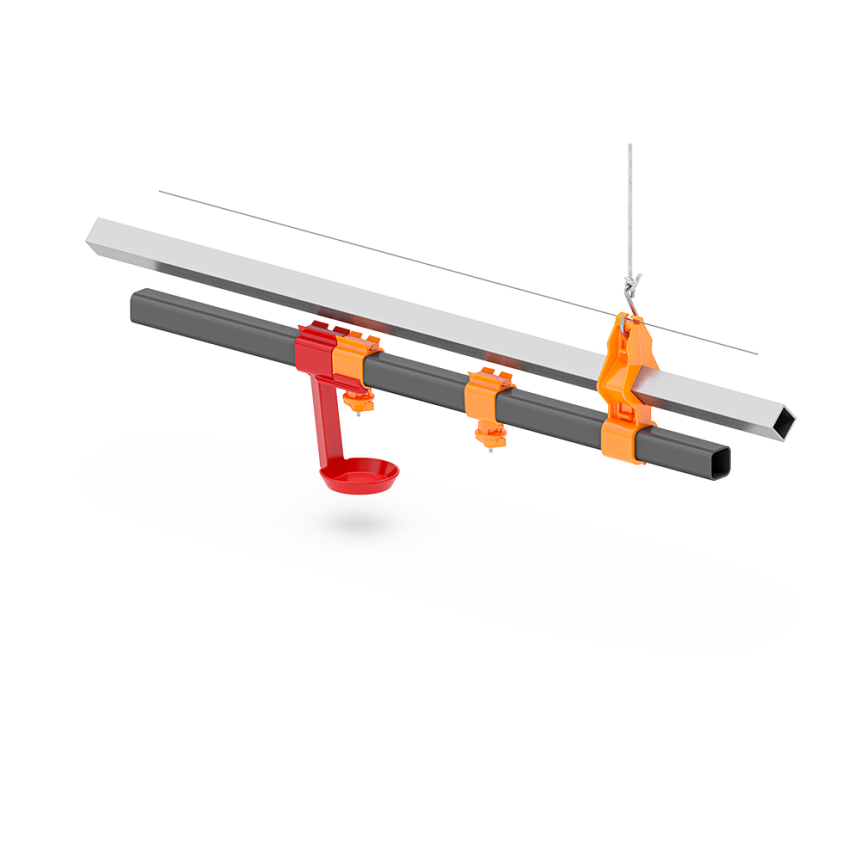
Designed specifically for ducks and turkeys, Drinker-T-Line offers optimum performance and functional efficiency with few components. This water supply system features a pendulum connected to the nipple, which oscillates thanks to the ducks’ pecking. This system minimizes water wastage and allows correct calibration of the water supply.

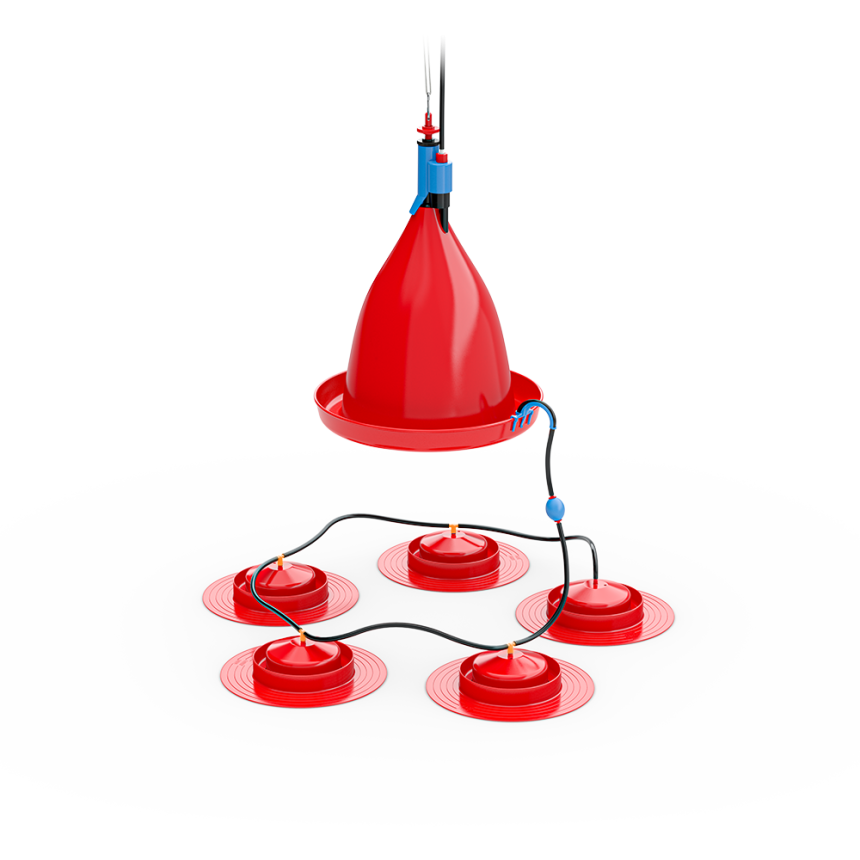
Poultry farms can also use the Mini Jumbo Drinker, by Giordano Global, for efficient watering of chicks. This system can be connected directly to a PVC water pipe or a line of drinkers.
Giordano Global’s watering systems are characterized by their environmental sustainability. The Italian company is renowned for its plastic recycling practices and for generating its own energy in its production facilities.
In addition, the high quality of its plastic drinkers ensures durability and efficiency, avoiding costs associated with replacement, contamination or wasted water.
For medium and large production poultry farms, automated water flow systems are the best option for optimum production. These systems can be remotely monitored and supported to ensure optimum performance and bird welfare.

Recommendations for an efficient water supply system
Poultry farms can implement improvements, processes, and equipment to ensure an efficient water supply, such as
- Monitoring the physico-chemical conditions of the water supplied
- Assessing the microbiological quality of the water consumed by the birds
- Establishing cleaning and disinfection systems and procedures for storage tanks and supply equipment
- Installing equipment to measure the pressure and temperature of the water supplied
- Setting the correct height of drinkers according to the age and species of birds
- Incorporate filtration systems for physical or organic contaminants
- Regularly checking for leaks to avoid wasting water.
Conclusions
Water supply systems in poultry production are essential to ensure the health, welfare, and productivity of poultry farms.
Efficient watering systems using equipment such as nipple drinkers or bell drinkers, operated through an automated system, are essential to ensure birds have constant and safe access to the water they need.
Poultry farms can use equipment such as the Sorbetto System, Super Drop Drinking and Drinker T-Line, which are specifically designed for diverse types of poultry and offer innovative solutions that minimize water waste and contamination.
Implementing these systems not only improves feed conversion and the quality of poultry products, but also contributes to environmental sustainability by reducing the water footprint. It also promotes animal welfare by ensuring that birds do not suffer from thirst and can thrive in an optimal environment.

CATEGORIES
- Antibiotics
- Antioxidants
- Aquaculture
- Deodorizer
- Digestives
- Dissemination
- Enzymes
- Events
- Farm management
- Farm management
- Fats
- Feeding
- Flavorings
- Immunostimulants
- Microbiocide
- Mycotoxins
- Nutritionals
- Pathology
- Pharmacology
- Poultry Farming
- Preservatives
- Pronutrients
- Ruminants
- Swine
- Technology
It may interest you
Viral respiratory diseases in poultry farming: How to prevent them with vaccination systems
Reduction of gases in pig farms: the role of natural additives in emission mitigation
Poultry Nutrition: the role of feed supply systems and their impact on sustainable production
Enterococcus cecorum: A Growing Challenge in Broiler Production
Biosecurity in egg handling: What recommendations to consider?
Leave a Reply
You must be logged in to post a comment.