


Global Egg Industry: What equipment has enabled its success?
The global egg industry has achieved remarkable success through innovation in production equipment and technologies. Which ones stand out?

The egg industry has established itself as one of the strongest sectors of the global food and livestock market. The continued growth in demand for animal protein that is both affordable and nutritious has driven the need for technologies that ensure quality, efficiency, and food safety.
In this context, egg grading equipment plays a key role in enabling producers to respond to market challenges and meet the highest standards of hygiene and quality.
The global egg market is experiencing exponential growth and is expected to be worth more than $130.70 billion by 2024. This upward trend, projected at 8.17% per annum until 2029, reflects the growing global demand for this commodity.
Globally, China is the major player, accounting for a significant portion of the egg industry, generating more than US$22.5 billion in revenue. On an individual level, per capita consumption exceeds 6.2 kg per year, contributing to a global market value of US$16.87 per person. By 2029, production is expected to reach 61.27 billion kilograms, demonstrating the potential of the sector.
The importance of egg grading in the poultry industry
In the poultry industry, there are many links in the chain that make up the complex system of producing and supplying eggs to the human population. From the bottom of the farm, vaccination, and ventilation systems, feeding equipment, water supply and facilities, disease prevention and good husbandry practices are all part of this chain.
At the back end of the egg industry, the handling and grading of hen eggs requires the highest standards of efficiency to ensure farm productivity, improve traceability and optimize resource management.
This egg grading process is based on criteria such as weight, shell quality and freedom from defects, which modern automated equipment can detect with high accuracy.
The increasing global demand for eggs has led poultry farms to automate and technologize grading to increase efficiency and reduce errors, improve product quality, and reduce operating costs.

How is egg grading equipment revolutionizing the poultry industry?
The use of automated grading equipment has completely transformed the poultry industry. The integration of sensors and advanced technology makes it possible to quickly assess large volumes of eggs and grade them according to parameters such as size, weight, shell quality and defects.
For this purpose, automated egg grading equipment includes technological tools or solutions such as:
- Precision sensors: Modern equipment uses advanced sensors to detect invisible cracks in the shell or internal anomalies without breaking the egg.
- High speed: These automated systems can process hundreds of eggs per hour, increasing production capacity without compromising quality.
- Reduced damage: Gentle handling through automation significantly reduces the number of eggs broken during handling, improving economic returns for producers.
- Sustainability: Today’s equipment, such as GI-OVO, is designed with energy efficiency and waste reduction in mind, helping industry to become more sustainable and in line with environmental requirements.
Benefits of egg grading automation
The introduction of automated egg grading equipment has brought many benefits to the poultry industry, including.
- Increased accuracy: Advanced sensors reduce the margin of error, ensuring more consistent and standardized grading.
- Processing speed: The ability to process thousands of eggs per hour allows growing demand to be met without increasing manpower.
- Improved traceability: This equipment records accurate data on each egg, facilitating traceability and quality control throughout the supply chain.
- Reduced manual handling: By minimizing human contact, the risk of contamination and breakage during processing is reduced.
- Regulatory compliance: Automated systems enable accurate grading, ensuring that eggs meet the quality and food safety requirements of national and international regulations.
- Reduced wastage: The ability of the equipment to detect and separate defective eggs at an early stage significantly reduces wastage.

Good egg handling and grading practices
To maximize the performance of egg grading equipment and ensure product quality, it is essential that good management practices are applied on the poultry farm. Some of the most important include.
- Regular cleaning and disinfection of equipment: Keeping equipment free of residues and contaminants is essential to ensure that the grading process does not compromise food safety.
- Environmental control: Eggs must be stored at the correct temperature and humidity before and after grading to avoid fluctuations that could affect freshness.
- Stock rotation: Implementing an efficient rotation system ensures that the freshest eggs reach the market first.
- Staff training: Even when systems are automated, it is vital that operators are well trained to monitor the operation of the equipment and resolve any eventualities.
- Preventive maintenance: Conduct regular checks on equipment to ensure optimum performance and prevent unexpected breakdowns.
- Comprehensive quality control: Implement internal audits to ensure graded eggs meet quality standards, reducing returns and complaints
You can also be interested in: Optimization and welfare on the poultry farm: the essential plastic equipment
Innovation and sustainability: the future of egg grading
The future of the egg industry is one of technological innovation and sustainability. The integration of tools such as artificial intelligence and data analytics will enable grading teams to make more accurate and personalized predictions, further optimizing performance.
In this sense, GI-OVO is positioned as a leader in equipment innovation for the poultry industry, combining advanced automation with sustainable solutions. Its equipment not only meets the needs of producers today, but is also prepared for the challenges of tomorrow, adapting to new regulatory and market requirements.

GI-OVO’s innovative egg grading equipment
As the egg industry becomes more automated and sustainable, the equipment must also adapt to ensure that products reach the consumer’s table in optimum condition, from farm to farm, from distributor to consumer.
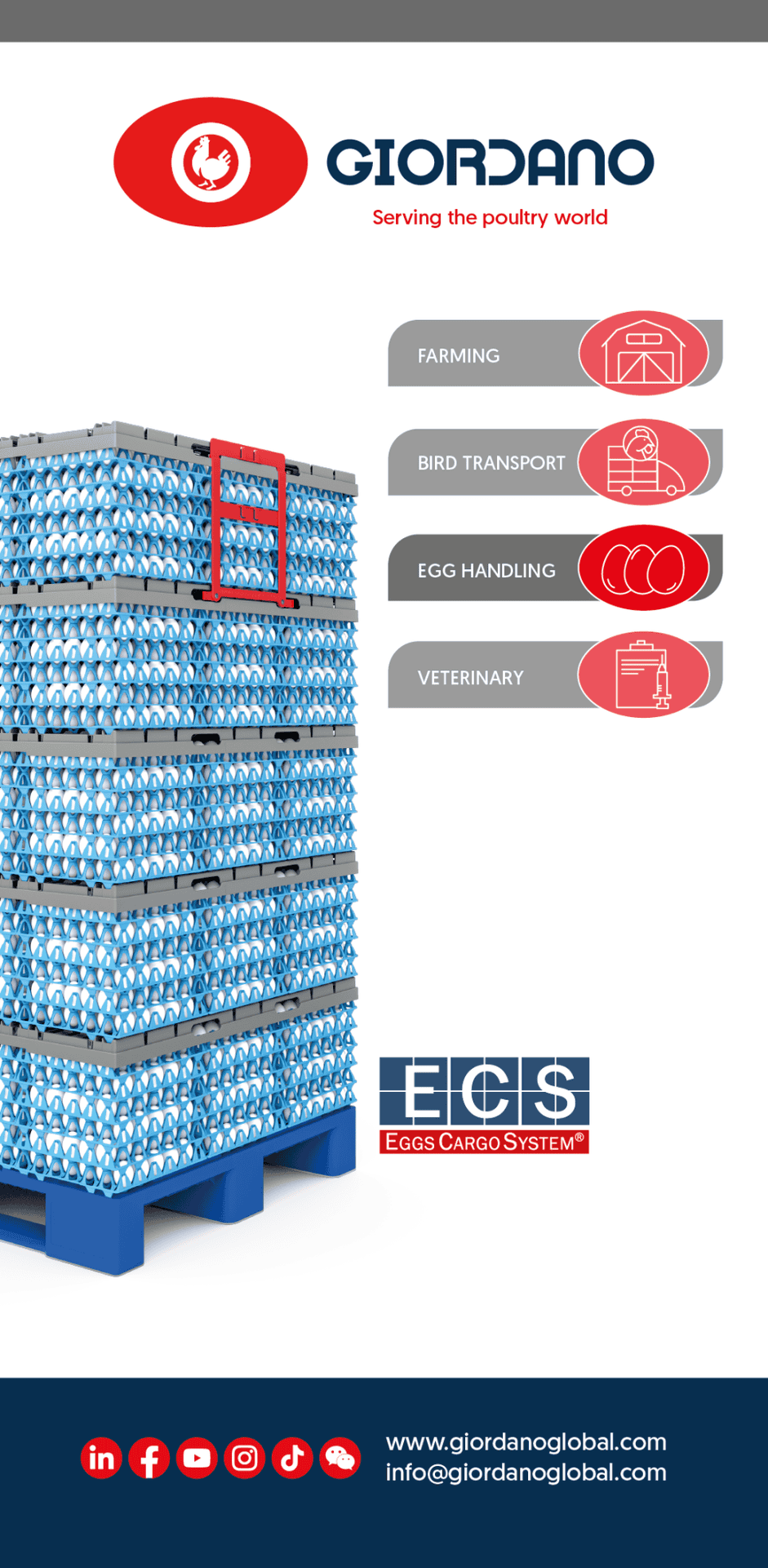
A critical aspect of this process is the efficient transport and handling of eggs, an area where GI-OVO has developed innovative, market-leading solutions with equipment such as the EggsCargoSystem.
With a customer base of more than 1,600 customers worldwide and close collaboration with leading egg grading equipment developers such as Sanovo and Moba, GI-OVO has positioned itself as an industry leader.
The EggsCargoSystem not only protects eggs during transport, but also ensures that they can be handled efficiently by automatic equipment.
Key features of the EggsCargoSystem
- Durability and reliability: Thanks to high quality raw materials and precise dimensions, the EggsCargoSystem has a very long service life, with some components in use for more than 15 years. The durability of its trays, dividers and pallets reduces replacement costs and ensures safe transport.
- Compatibility with automation: One of the major benefits of this system is its ability to integrate seamlessly with robots and other automated equipment used in poultry farms and processing plants.
- Constant innovation: GI-OVO continues to innovate to improve the efficiency and safety of egg transport. Recently, the company developed pallets reinforced with plastic-coated steel rods to prevent water ingress and bacterial growth.
- Vision technology for quality control: The Tray Inspector, another GI-OVO innovation, is an intelligent solution that uses vision technology to identify and remove damaged trays from circulation, preventing potential failures in processing equipment and improving operational efficiency.
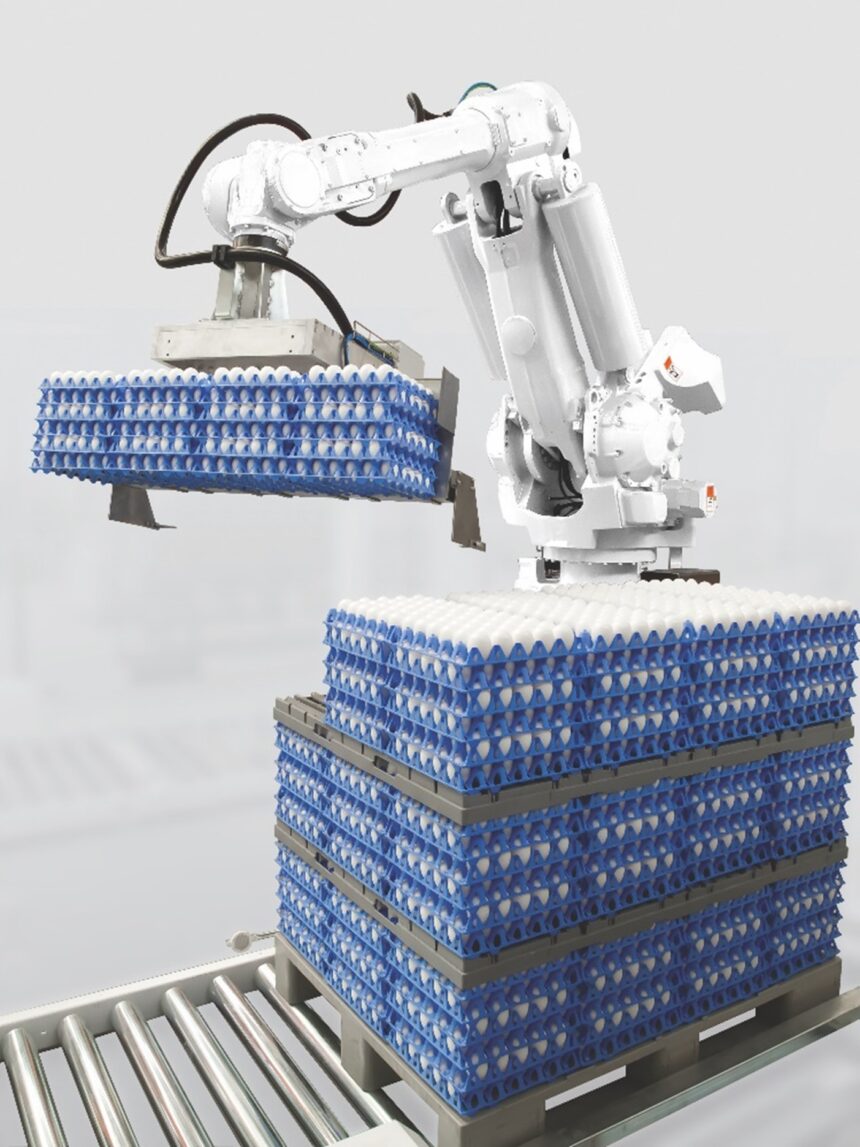
After 25 years on the market, the EggsCargoSystem has become a high-quality standard in the global poultry industry. Its robustness, adaptability to automated technology and focus on continuous improvement has led to the EggsCargoSystem being adopted as a reliable and durable solution by the industry’s leading companies.
As a result, EggsCargoSystem production facilities have been established in leading poultry industry countries such as the USA, Brazil, Malaysia, and China.
CONCLUSIONS
The egg industry has evolved significantly through automation and technological advances in grading equipment. These automated systems have improved efficiency, accuracy, and safety in the handling of large volumes of eggs, ensuring quality products that meet international standards. Their implementation has reduced errors, optimized traceability, and minimized losses, which are essential for modern and competitive poultry production.
In addition, solutions such as GI-OVO’s EggsCargoSystem complement this process by protecting eggs during transport and enabling seamless integration with automated systems. With more than 25 years in the market, this system has become a benchmark, offering durability and sustainability to ensure egg quality throughout the supply chain.


CATEGORIES
- Antibiotics
- Antioxidants
- Aquaculture
- Deodorizer
- Digestives
- Dissemination
- Enzymes
- Events
- Farm management
- Farm management
- Fats
- Feeding
- Flavorings
- Immunostimulants
- Microbiocide
- Mycotoxins
- Nutritionals
- Pathology
- Pharmacology
- Poultry Farming
- Preservatives
- Pronutrients
- Ruminants
- Swine
- Technology
It may interest you

Viral respiratory diseases in poultry farming: How to prevent them with vaccination systems
Reduction of gases in pig farms: the role of natural additives in emission mitigation

Poultry Nutrition: the role of feed supply systems and their impact on sustainable production

Enterococcus cecorum: A Growing Challenge in Broiler Production

Biosecurity in egg handling: What recommendations to consider?
Leave a Reply
You must be logged in to post a comment.