


Control of rapid transit in breeding sows
Rapid intestinal transit in pregnant and lactating sows is a very important problem for the productive performance of both, the sows and the piglets, since the digested feed is not assimilated in its entirety...

Introduction: rapid transit
Accelerated intestinal transit in swine farms, both fattening and breeding, is a serious problem for productive performance, because it prevents the feed from being digested and assimilated in its entirety. That is, there will be digestibility values below the standard, and feed conversion will be negatively affected.
Likewise, rapid transit indirectly produces an increase in the humidity of faeces and litter, which is a predisposing factor for the appearance of several pathologies, since it increases the volatilization of irritating compounds such as NH3.
On the other hand, rapid transit generates deterioration of the intestinal mucosa, favouring dysbiosis and the appearance of outbreaks due to the overgrowth of pathogenic microorganisms, and also by others that are not pathogenic when the intestine is in adequate physiological conditions. This is of great importance, given that the intestine will not be in optimal physiological conditions, being an inefficient organ and susceptible to different pathologies.
The implication of rapid transit in breeding sows
In the case of pregnant and lactating sows, the problem is that, as the digestibility and absorption of nutrients is affected, this will have an impact on the next generation of piglets. It means that, although a part of these nutrients will be key for the maintenance of the sow itself, an important part will be destined to maintain an adequate gestation that allows obtaining litters in appropriate number, optimal weight, and with adequate conditions for subsequent fattening.
Alquerfeed Diatom: diets supplemented with specific activated diatoms
Diatoms are algae exoskeletons with a cell wall composed of silica, whose surface has pores that allow water absorption. Spherical diatoms, specifically, have a greater capacity to absorb water through these pores, and this capacity increases when the diatoms are subjected to an activation process by which the pores of their structure are released and thus, their absorbent capacity is optimized.
In intensive farming, animals have a high feed consumption per day, which stimulates peristalsis by distending the digestive tube, and intestinal transit is accelerated. This is where activated diatoms come into play. The pores on the surface absorb water molecules and reduce the volume of the intestinal bolus and, therefore, the speed of transit is also reduced.
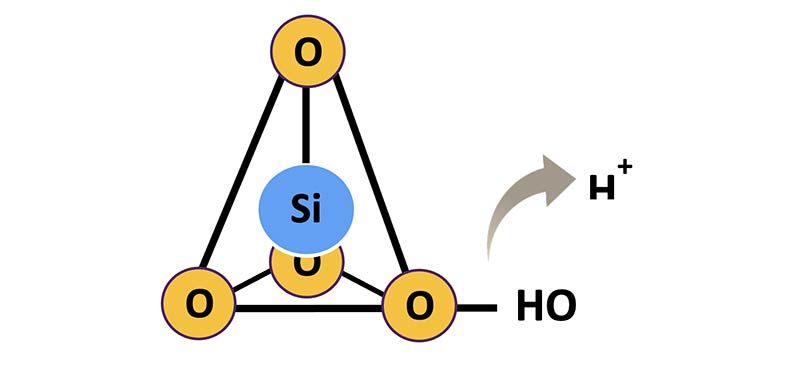
On the other hand, activated diatoms also have an acidifying function in the intestinal lumen. The water in the intestine dissociates and generates H+ and OH–, the hydroxyl groups (OH–) react with the oxygens of the silicate molecules from the activated diatom, and decrease intestinal free water. The protons (H+) remain free in the intestinal lumen, slightly acidifying the medium, which favours digestive processes.
Field results in pregnant and lactating sows
In animals, Alquerfeed Diatom has been tested in different experimental and commercial trials, following scientific methodology. In a recent trial, carried out in collaboration with a Peruvian University (Universidad Católica de Santa María de Arequipa), from November 2022 to July 2023, the inclusion of Alquerfeed Diatom was evaluated in diets of primiparous and multiparous sows, both in gestation and lactation, and its effect on the slowdown of intestinal transit, on the reproduction and on the performance of the litter were assessed.
For the experiment, two batches were established, where the diets were supplemented as follows:
- T1 (Diatom): the same diet administered in the control group (a basal diet used in the region) + Alquerfeed Diatom at a dose of 0.5 kg/t continuously throughout the trial, from two weeks before insemination and until weaning.
- T2 (Control): usual diet of the sows, without any product similar to Alquerfeed Diatom to control the speed of digestive transit.

To determine intestinal transit, the sows were fed with a colouring marker in the diet, and the first faeces containing the marker were observed, comparing the times between the batch supplemented with the additive and the control batch. Thanks to the use of Alquerfeed Diatom, the transit speed was reduced by more than 9%.

Thanks to the reduction of intestinal transit and the improvement of the digestive processes with the use of Alquerfeed Diatom, significant improvements were observed in the digestibility of the main nutrients. In this sense, the digestibility of organic matter was improved by 12%, protein digestibility (very important for the development of the sow and the future litter) by 13.8%, and the digestibility of fat and carbohydrates (which increase the energy source), by 2.5% and 8.2% respectively.


These results in the sows had an impact on the litter, both in the number of piglets and in the weight of the litter at birth, with improvements of 19.8% and 25.2% respectively.


This fact was also shown at weaning, with 27.8% more piglets weaned, having 45.1% more litter weight at weaning.

Mortality during the lactation period was reduced by 5.7% in sows supplemented with Alquerfeed Diatom compared to the control group. A better nutritional status of the sow is related to a better physiological status of the progeny.


The evolution of piglet weight in the different phases, from birth to 60 days of age, had a positive progression. At birth, piglets weighed an average of 4.03% more, reaching 10.4% more weight on day 60, compared to the control batch.

Finally, regarding the economic return, it was observed that the cost of feeding per weaned piglet was $2.55 lower with the use of Alquerfeed Diatom. This is key for the overall economic result of the farm.
Conclusions
Rapid intestinal transit in pregnant and lactating sows is a very important problem for the productive performance of both, the sows and the piglets, since the digested feed is not assimilated in its entirety. This affects the digestibility and absorption of nutrients, with an impact on the next generation of piglets. The use of Alquerfeed Diatom helps to solve it, as has been observed in different trials, both commercial and experimental, and as described in the previous sections, where the supplementation of Alquerfeed Diatom improved:
- Intestinal transit time (9.05% longer stay of the feed in the intestine).
- This increase in the time of the feed in contact with the villi improved nutrient digestibility significantly: +12% organic matter, +13.8% protein, +2.5% fats, +8.2% carbohydrates.
- Litter size (+19.8%) and litter birth weight (+25.2%) were improved.
- Litter size (+27.8%) and litter weight at weaning (+45.1%) were also improved.
- Piglet mortality during lactation was reduced by 5.7%.
- The performance of piglets is improved from birth, with higher weights, both at birth and at 14 and 60 days (+10.4% weight at day 60).
- The feeding cost per weaned piglet is lower with the use of Alquerfeed Diatom ($2.55 less).


CATEGORIES
- Antibiotics
- Antioxidants
- Aquaculture
- Deodorizer
- Digestives
- Dissemination
- Enzymes
- Events
- Farm management
- Farm management
- Fats
- Feeding
- Flavorings
- Immunostimulants
- Microbiocide
- Mycotoxins
- Nutritionals
- Pathology
- Pharmacology
- Poultry Farming
- Preservatives
- Pronutrients
- Ruminants
- Swine
- Technology
It may interest you
Viral respiratory diseases in poultry farming: How to prevent them with vaccination systems
Reduction of gases in pig farms: the role of natural additives in emission mitigation
Poultry Nutrition: the role of feed supply systems and their impact on sustainable production
Enterococcus cecorum: A Growing Challenge in Broiler Production
Biosecurity in egg handling: What recommendations to consider?


Leave a Reply
You must be logged in to post a comment.