


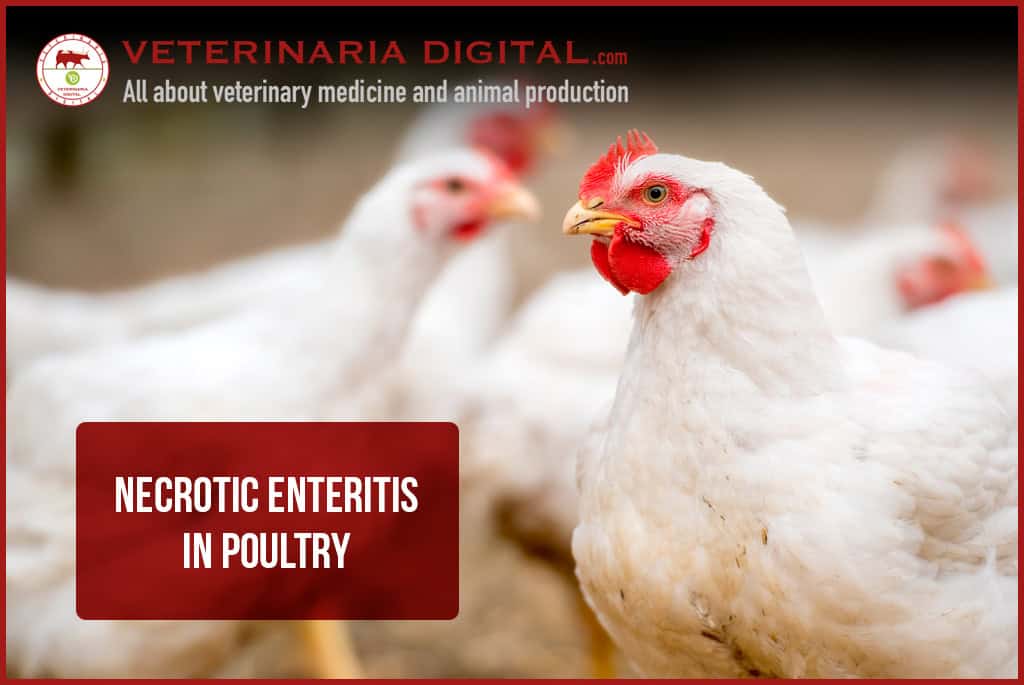
Necrotic enteritis in poultry
The high prevalence of C. perfringens in broilers is a serious concern for the poultry industry due to the consequent deterioration in production performance and high mortality rates...
Etiology
Clostridium perfringens is a gram-positive, anaerobic bacterium which can form highly resistant spores in the environment and is known to be the causative agent of necrotic enteritis, one of the diseases that mostly affects the poultry sector worldwide.
The prevalence of C. perfringens in broiler chickens is an important problem to the poultry industry, it can affect about 25% of broiler chickens, depending on farm conditions and the country.
Risk factors
Several factors can increase the frequency of C. perfringens in broilers, such as:
- The age of the birds: younger chickens are more susceptible to perfringens infections, although the severity is higher at ages close to slaughter due to the high productive pressure of the digestive organs.
- The health condition of the chickens: birds with underlying diseases, such as coccidiosis, are more prone to perfringens infection (they are correlated diseases). Nutritional status plays an important role in, as the health and immune status depend on it.
- Management: poor management conditions, such as overcrowding and poor hygiene, can increase the risk of perfringens infection. Diet management is also essential, as high protein levels, use of unsafe raw materials, or poor use of exogenous enzymes can contribute to the problem.
The main symptoms include bloody diarrhoea, weight loss and worsened productive performance, high mortalities, and flatulence in some cases.
Numerous tests are available to diagnose necrotic enteritis in broilers, including:
- Necropsies: post-mortem examination may reveal characteristic lesions, such as inflamed and necrotic gut and intestinal gas.
- Laboratory tests: such as bacterial culture, can confirm the presence and quantification of perfringens.
Prevention and treatment of necrotic enteritis
Necrotic enteritis in broilers does not have specific treatments. The therapy is usually supportive and may include fluid therapy to replace fluids lost in the diarrhoeal process, antibiotics to treat secondary infections and reduce the Clostridium load, and nutrient supply to foster the broiler’s recovery.
Necrotic enteritis can be prevented with various strategies, such as improving management conditions, controlling the diet, and predisposing factors like coccidiosis, among others.
Currently, Biovet S.A. has developed a natural technology which is marketed as Alquermold Natural (AMN), based on natural antimicrobial principles that act synergistically, and which has proven to be highly effective in both the prevention and natural treatment of necrotic enteritis. It acts as a natural antimicrobial against Clostridium and other pathogens and destabilises the cell membrane from the inside, causing its rupture and the death of the bacteria. In this way, Biovet S.A. technology keeps Clostridium overgrowth under control during the whole cycle if administered continuously in the feed. Furthermore, when an outbreak is detected. It supports mortality when liquid form is supplied in drinking water.
This tool can be safely used throughout the production cycle up to slaughter age as it is natural, does not create resistance, and does not require a withdrawal period. In addition, it promotes beneficial flora such as Lactobacillus.
Trial
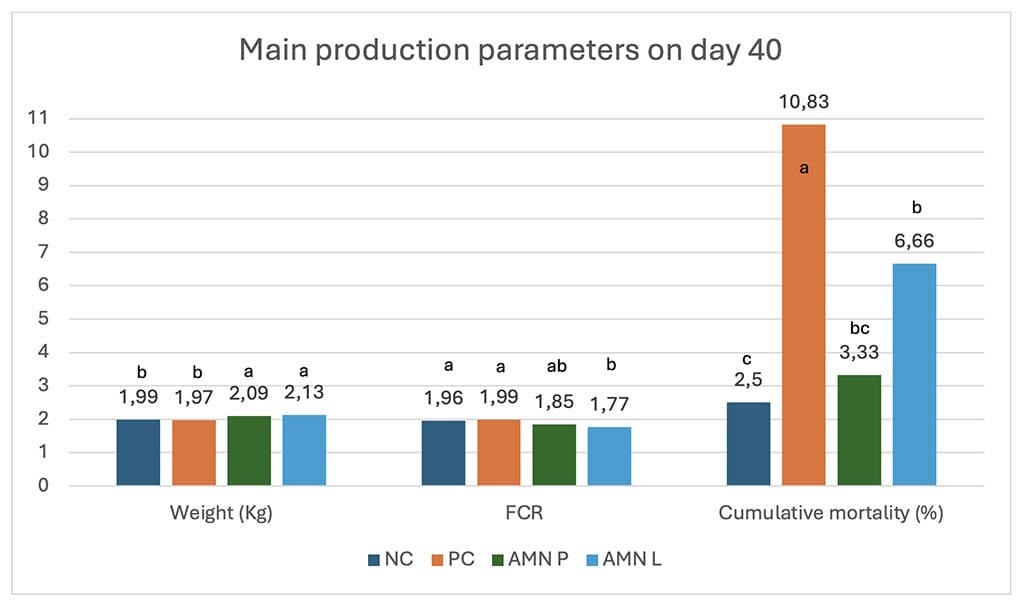
The aim of the trial was to study the effect of AMN P as a preventive and AMN L as a treatment challenging chickens with C. perfringens at days 14, 15 and 16. AMN P was administered since day 1 continuously at 0.5 Kg/t and AMN L since day 20 (when necrotic enteritis outbreak occurred) until day 27. Results were obtained at a university (see chart)
Conclusions
The high prevalence of C. perfringens in broilers is a serious concern for the poultry industry due to the consequent deterioration in production performance and high mortality rates. Different measures can prevent necrotic enteritis, like improving management and nutritional conditions, controlling predisposing factors, and using natural tools such as those develop by Biovet S.A. and included in its line of natural preservatives and antimicrobials, which also serve as treatment during outbreaks with high mortalities.


CATEGORIES
- Antibiotics
- Antioxidants
- Aquaculture
- Deodorizer
- Digestives
- Dissemination
- Enzymes
- Events
- Farm management
- Farm management
- Fats
- Feeding
- Flavorings
- Immunostimulants
- Microbiocide
- Mycotoxins
- Nutritionals
- Pathology
- Pharmacology
- Poultry Farming
- Preservatives
- Pronutrients
- Ruminants
- Swine
- Technology
It may interest you
Viral respiratory diseases in poultry farming: How to prevent them with vaccination systems
Reduction of gases in pig farms: the role of natural additives in emission mitigation
Poultry Nutrition: the role of feed supply systems and their impact on sustainable production
Enterococcus cecorum: A Growing Challenge in Broiler Production

Biosecurity in egg handling: What recommendations to consider?


Leave a Reply
You must be logged in to post a comment.