


Best practices in poultry egg handling: how GI-OVO equipment is changing the industry
Eggs are one of the most consumed foods in the world, which is why it is necessary to use automated equipment to optimize their handling and transport.

Global egg consumption: a historic change
World egg consumption has grown significantly from 1980 to the present day, reflected in an increase in per capita consumption. This growth is mainly due to the increase in the world population from around 4 billion in 1980 to the current figure of 8 billion.
The growing demand for high quality protein has made eggs an important, nutritious food that has gained popularity in households around the world.
This ever-increasing demand has led to significant improvements in poultry farming processes and supply chains, making eggs an affordable food option today. In addition to its contribution to nutrition, its culinary versatility, stability without refrigeration, resilience and nutritional richness in vitamins and minerals have further boosted its global consumption.
In today’s context, where sustainability in animal production is a priority, the egg industry stands out for its adoption of environmentally friendly practices. It is recognized that egg production has a low carbon and water footprint compared to other animal protein sources. This characteristic positions eggs as an excellent alternative in diets that focus on environmental sustainability.

The challenges of egg production in the 21st century
As the world’s population has grown, the poultry industry has significantly improved its production processes. On the one hand, there have been improvements in layer genetics for growth and development, better feed conversion, increased disease resistance and better egg quality.
On the other hand, animal nutrition has made rapid progress in providing high quality diets to meet the nutritional requirements of laying hens.
However, there are now challenges for poultry farming in egg production. The first challenge is to ensure hygiene and good egg handling throughout the egg cycle, from the farm to the consumer’s table. The aim is to reduce biological risks, optimize handling, avoid contamination, and protect the integrity of the product.
To ensure good egg handling practices, advanced technologies are used to mitigate all these risks and increase the efficiency of the production chain.
Another challenge is to improve the welfare of production poultry. Poultry farms are therefore implementing ventilation systems that ensure thermal comfort. Farms can also improve flooring, feeders, and drinkers to reduce the likelihood of accidents or disease. Similarly, poultry farms around the world implement strict vaccination and nutrition plans to ensure the health of the birds.
An additional challenge is environmental sustainability, where egg production can make a tangible difference by reducing its carbon and water footprint, and implementing good waste management, medication, and good agricultural practices.
You may be interested in: Egg quality in Canada
Good practice in egg handling: what do we need to consider?
Egg handling is a process that requires strict controls and protocols to maintain egg quality, hygiene, and integrity. Small-scale farms often handle, transport or grade eggs manually. However, modern, or medium and large farms are looking to implement improvements in these steps.
Therefore, the implementation of good egg handling practices is of great importance. These practices are greatly facilitated using modern automated equipment such as GI-OVO’s EggsCargoSystem.
- Egg hygiene: The highest standards of hygiene must be maintained in all processes, rooms, and personnel in contact with the product.
- Environmental control: It is recommended that the temperature and humidity of the rooms where eggs are stored or transported be controlled to ensure freshness and quality.
- Careful handling: despite the protection provided by the shell, eggs are fragile. Staff must be trained in good egg handling or in the use of automated equipment.
- Grading: eggs are graded according to size, so an EggsCargoSystem facilitates this by having sensors that automatically grade the egg.
- Proper storage: adequate and controlled facilities must be available to store eggs for specified periods of time.
- Quality control: During the processes, there must be constant quality control to eliminate eggs with defects or alterations.
- Accurate labelling: batches of eggs must be clearly identified to facilitate the traceability of the process.
- Safe transport: containers and transport mechanisms should be in place to maintain the integrity of the eggs and reduce vibration, shock, or accidents.
- Personnel training: the human team involved in the egg processes must be trained in good handling and hygiene practices.
- Use of automated equipment: many of the common problems in egg handling can be prevented using automated equipment. Such equipment reduces the likelihood of breakage, damage, or contamination of eggs and improves transport, storage, and grading.
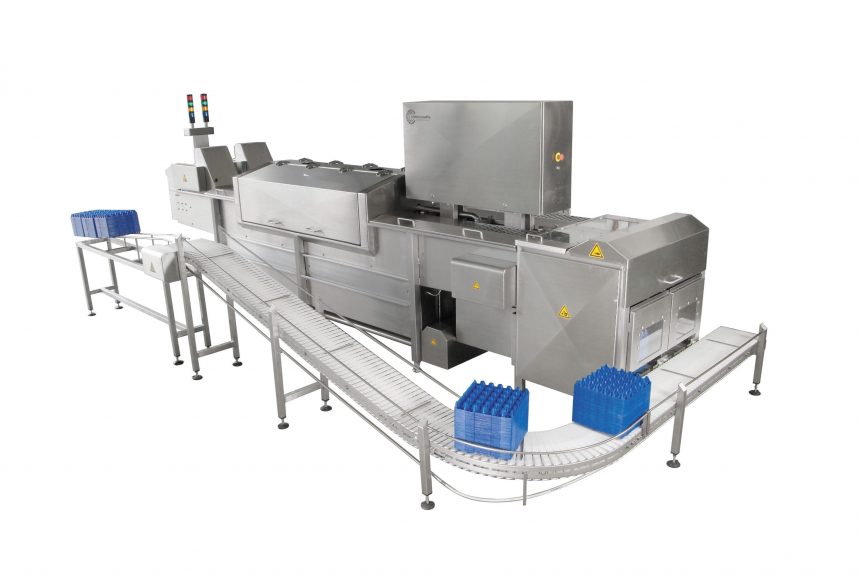
Why is GI-OVO’s EggsCargoSystem changing the egg industry?
The EggsCargoSystem is a piece of equipment developed by GI-OVO, a subsidiary of the Italian company Giordano Poultry Plast. This GI-OVO equipment was developed in 2000 to meet the needs of the poultry egg industry. The EggsCargoSystem made it possible to automate the previously manual egg transport and handling processes with robots.
Process optimization, increased efficiency, better hygiene, and higher workloads in egg handling compensate for the purchase value of the EggsCargoSystem. Robotic egg handling automation maintains egg integrity, quality, and hygiene.
In addition, GI-OVO’s EggsCargoSystem is a piece of equipment that continuously cleans and disinfects its parts to ensure egg quality and hygiene. In this way, the product remains free of any contamination and protects the health of the consumer.
On the other hand, the pallets used to store and transport the eggs are made of high quality and resistant plastic. In addition, the equipment is reinforced with steel tubes to improve the stability of the system. This prevents the pallets from bending or compromising the integrity of the egg. GI-OVO’s EggsCargoSystem is a system with the best safety and resistance compared to others on the market.
Finally, GI-OVO’s EggsCargoSystem is a machine that is revolutionizing the global poultry industry by incorporating state-of-the-art technology. It is equipped with chips and vision sensors that check the condition of the trays in which the eggs are placed. The equipment can detect and report minor damage, which is invisible to the human eye, for timely intervention.
You may be interested in: Soft-shelled eggs by adenovirus
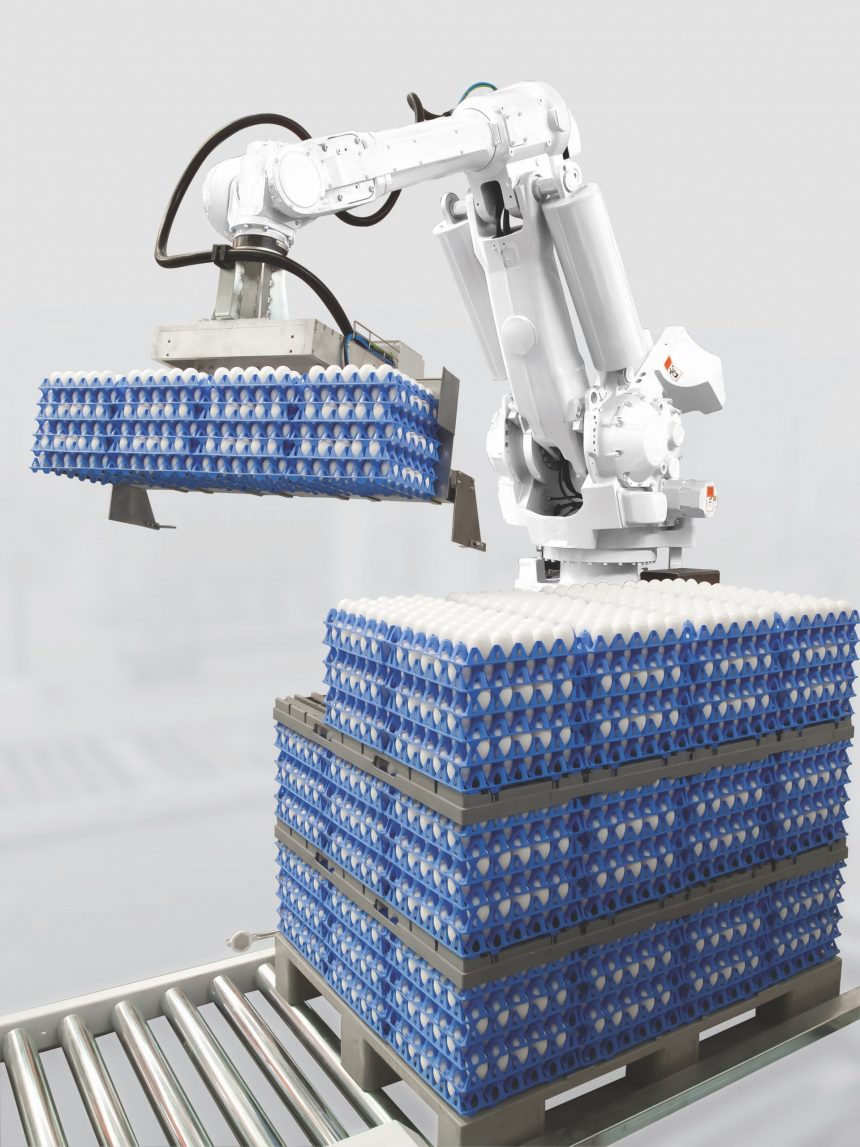
What impact has the EggsCargoSystem had?
GI-OVO’s EggsCargoSystem is a piece of equipment that has been improving egg transport and handling processes in several countries for two decades. As a result, it has been proven that production systems using the EggsCargoSystem have less than 3% of eggs broken during transport.
The EggsCargoSystem also stands out as the most sustainable system on the market. On the one hand, it has a significantly longer life thanks to the strength and quality of the materials it is made of. It is also fully recyclable. In this way, it helps to preserve the environment by reducing waste and the use of plastics.
In addition, its efficient design increases the volume of eggs transported in the same vehicle, while maintaining safety and quality during the process. To this end, GI-OVO has developed three EggsCargoSystem models to suit every need.
- Traditional EggsCargoSystem for the transport of hen eggs, with pallets that can hold up to 12,960 eggs.
- EggsCargoSystem XL for the transport of larger eggs such as duck and turkey eggs; this pallet can hold up to 5760 eggs.
- EggsCargoSystem mini is the latest model, launched in 2010, and is designed for retailers, as it can transport 2880 eggs per pallet.
Finally, the EggsCargoSystem is unique in that its system of robots, chips and sensors can inspect up to 2500 trays per hour for damage and remove them from circulation. As a result, the GI-OVO system maintains the highest standards of quality and efficiency in the egg handling process.
CONCLUSIONS
The egg industry has undergone a historic change in global consumption, characterized by a remarkable increase in production and consumption from 1980 to the present day. This growth has been attributed to population growth, resulting in eggs becoming a key food with nutritional benefits, culinary versatility, and environmental sustainability. However, egg production faces challenges in the 21st century, including hygiene assurance, process optimization, animal welfare and environmental sustainability.
In response to these challenges, good egg handling practices are essential. The implementation of advanced technologies, such as GI-OVO’s EggsCargoSystem, is highlighted to optimize the production chain. This automated system offers significant benefits, from hygiene and gentle handling to automatic grading and work volume.
The EggsCargoSystem is transforming the poultry industry by improving the efficiency and safety of egg handling. With more than two decades of operation, it has been proven to significantly reduce egg breakage during transport. In addition, its focus on sustainability, with recyclable materials and efficient design, helps protect the environment. This innovative system, based on state-of-the-art technology, reflects GI-OVO’s commitment to quality, efficiency and sustainability in egg production and handling worldwide.


CATEGORIES
- Antibiotics
- Antioxidants
- Aquaculture
- Deodorizer
- Digestives
- Dissemination
- Enzymes
- Events
- Farm management
- Farm management
- Fats
- Feeding
- Flavorings
- Immunostimulants
- Microbiocide
- Mycotoxins
- Nutritionals
- Pathology
- Pharmacology
- Poultry Farming
- Preservatives
- Pronutrients
- Ruminants
- Swine
- Technology
It may interest you

Viral respiratory diseases in poultry farming: How to prevent them with vaccination systems
Reduction of gases in pig farms: the role of natural additives in emission mitigation
Poultry Nutrition: the role of feed supply systems and their impact on sustainable production
Enterococcus cecorum: A Growing Challenge in Broiler Production

Biosecurity in egg handling: What recommendations to consider?

Leave a Reply
You must be logged in to post a comment.