


Effect of pronutrients in pullets and laying hens
The rearing of pullets is key to achieve the maximum genetic potential during the laying period. The objective of the rearing is to achieve the breed standard weight with a proper uniformity of the flock.
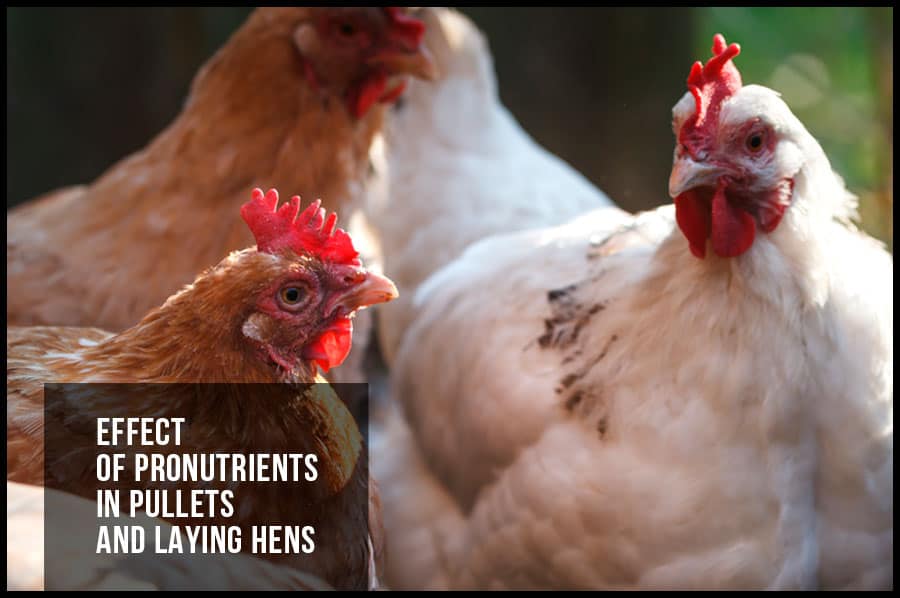
The rearing of pullets is key to achieve the maximum genetic potential during the laying period. The objective of the rearing is to achieve the breed standard weight with a proper uniformity of the flock.
For this purpose, as well as to obtain the highest egg production during the productive phase, a good status of the digestive system of the animal is mandatory. The structure and integrity of the gut mucosa will determine the absorption capacity of the animal and the supply of nutrients for the growth and egg formation.
Introduction
A trial was carried out in a farm of laying hens to evaluate the efficacy of intestinal conditioner pronutrients as a natural alternative to chemical growth promoters during the rearing and production periods.
Experimental Design
Animals in the trial were 30,329 Lohmann LSL laying hens, used as treatment group, which were compared with the standard parameters of the breed.
Pronutrients were applied in the drinking water during the rearing and laying period following this methodology below. Additionally, all growth promoters were withdrawn.
- From week 0 till week 28 of life: Pronutrients were applied continuously for two weeks every month at 1ml/L of drinking water.
- From week 29 till week 60 of life: Pronutrients were applied 1 week per month at 1 ml/L of drinking water.
Results
-
Rearing period
During the rearing stage, the average weight of the treated pullets remained similar to the breed standard, with a difference of only 15 grams at week 18th of age (chart 1).
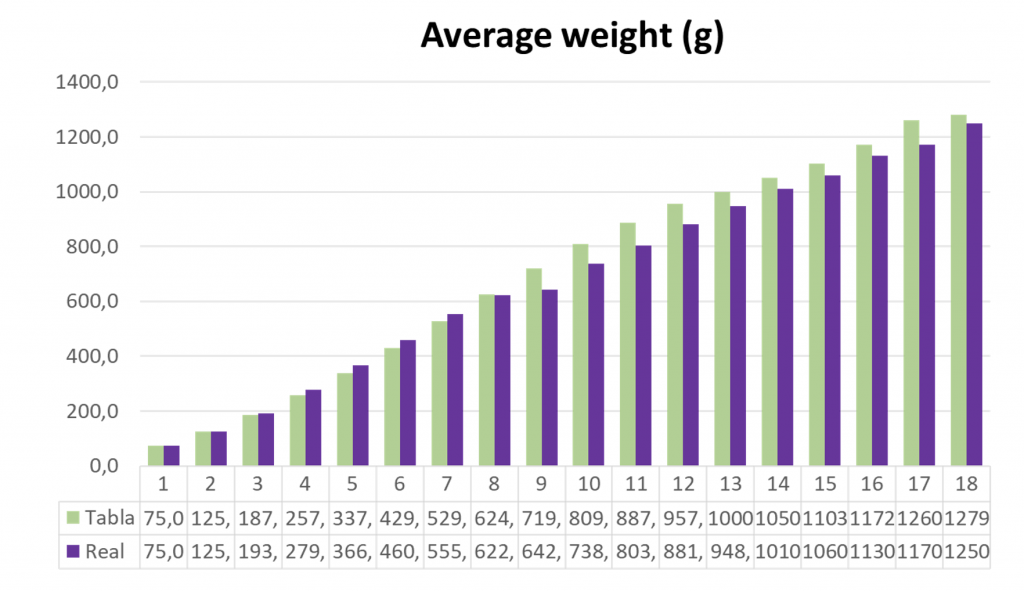
Chart 1. Average weight (g) of the treated flock (“REAL”, in purple) and breed standard (“TABLA”, in green) during the growing and rearing period.
In contrast, the treated group had a significantly lower feed intake compared to the breed standard (chart 2) and consumed 746 grams less of feed at 18 weeks of life (12% reduction). This means that the group receiving pronutrients reached a similar weight while consuming less feed.
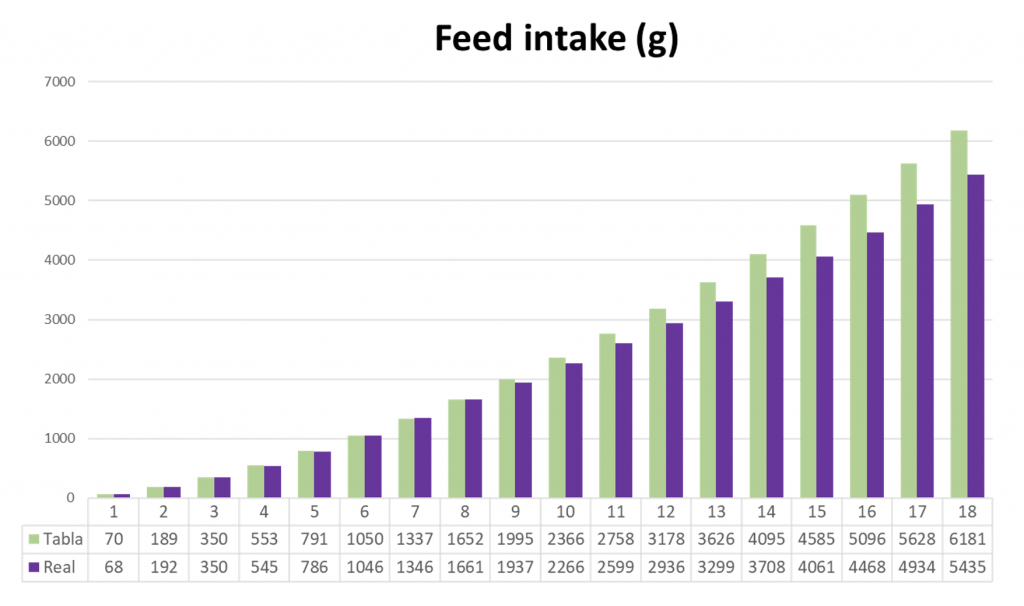
Chart 2. Average feed intake (g) of the treated flock (“REAL” in purple) and breed standard (“TABLA” in green) during the growing and rearing period.
-
Production period
The average weight of the treated flock remained similar to the breed standard during the laying period (chart 3). The laying rate was higher with pronutrients from week 28 till the end of the trial, compared to the breed standard (chart 4). In fact, pronutrients maintained the laying rate over 96% during the 17 weeks of trial (from week 29 till week 45) and was of 2.6 points higher than the breed standard at week 48.
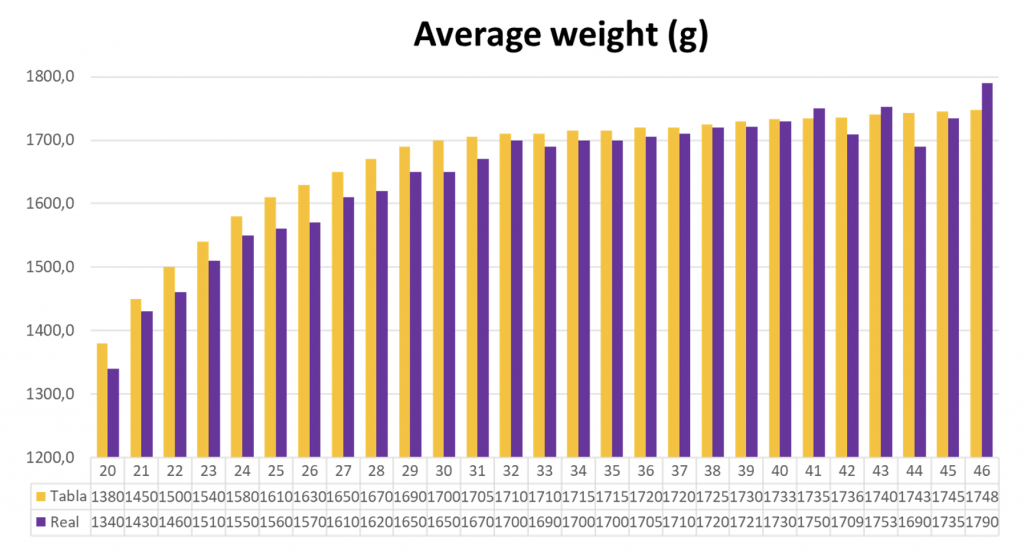
Chart 3. Average weight (g) of the treated flock (“REAL”, in purple) and breed standard (“TABLA”, in yellow) during the laying period.
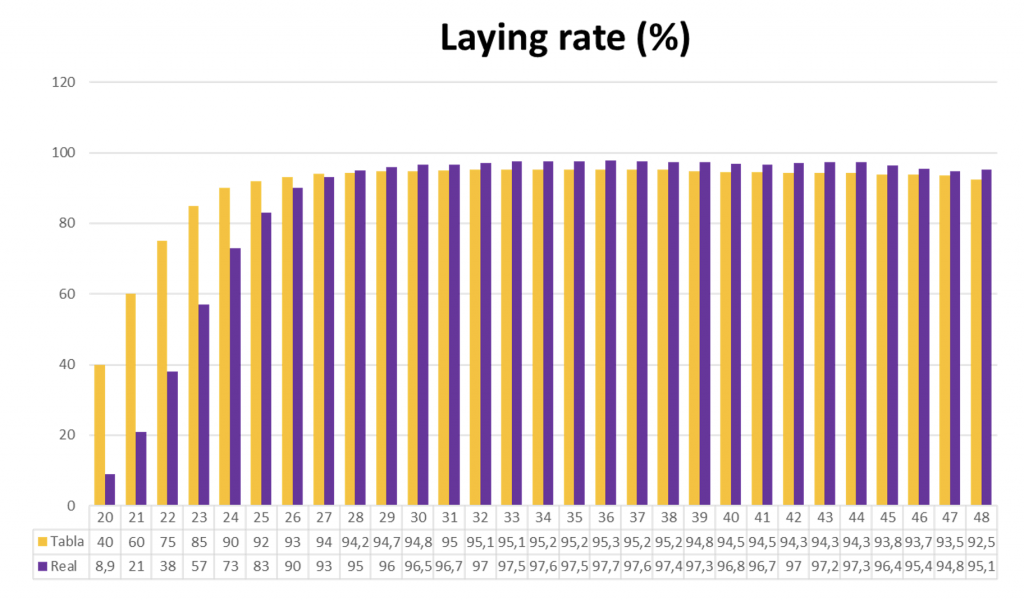
Chart 4. Average laying rate (%) of the treated flock (“REAL”, in purple) and the breed standard (“TABLA”, in yellow).
Egg grading of the treated flock was assessed (Chart 5), and almost half of the egg production was classified as “Big” (48%), meaning the egg weight in that case was over 59 grams, while the percentage of dirty eggs was low (1.85%).
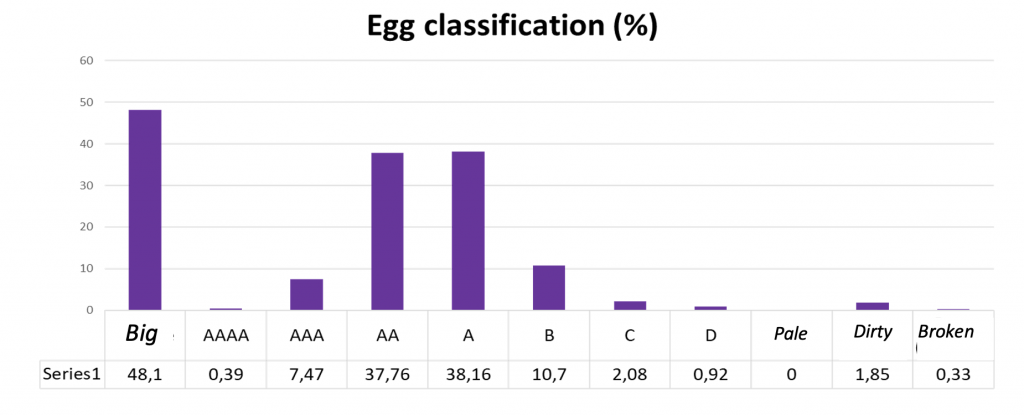
Chart 5. Egg grading (%) of the treated flock.
Conclusions
The hens that received intestinal conditioner pronutrients achieved the standard weight with a lower feed intake in the rearing (-746 g) and the laying period and increased the egg production (+2.6 points at week 48), the persistence of the laying peak and the egg weight and quality.
These results show the positive impact of intestinal conditioner pronutrients on the feed digestion and nutrient absorption and on the egg production and egg quality.
Besides, pronutrients are natural plant-based solutions, which do not generate resistances and can be used continuously without withdrawal period, since they do not leave residues in meat nor eggs.
Intestinal conditioner pronutrients are marketed by Biovet S.A. under the name “Alquernat Nebsui”.





Leave a Reply
You must be logged in to post a comment.